- Products
- Advanced Nano technology creates realistic, sharp, and sophisticated patterns.
- Striking veining blends artistry and nature for a luxurious touch.
- Timeless elegance with minimalist yet captivating designs.
- Crystalline Silica Free represents one of the most revolutionary advancements and the latest trends in the premium engineered quartz stone manufacturing industry.
- Pre-fabricated quartz pieces designed for convenience and beauty, reflecting each owner’s unique style and refined taste
- Customized quartz pieces precisely crafted to fit your project, ideal for countertops, vanities, and bespoke applications
- Applications
- Timeless Elegance & Durability
- Sophistication in Every Detail
- Serenity & Ultimate Comfort
- Your Personal Home Spa
- Projects
- News & Updates
- Discover Us
- Catalog
- Contact us


Engineered Quartz or Natural Stone? 7 Criteria for Your Project
13:45 | 12/09/2026
When selecting materials for a family kitchen, aesthetics, color, and cost are often the top priorities. However, for hotels, apartments, resorts, restaurants, or commercial projects with a large number of items, the material selection process becomes more complex.
At that point, the question is not only whether engineered quartz or natural stone looks better. It also involves bulk supply capacity, consistency between slabs, the ability to place additional orders, fabrication requirements, material wastage, maintenance, and usage conditions throughout the project’s lifecycle.
The article below analyzes engineered quartz and natural stone based on 7 commonly considered criteria, helping investors, contractors, design firms, and procurement teams make more informed material decisions.
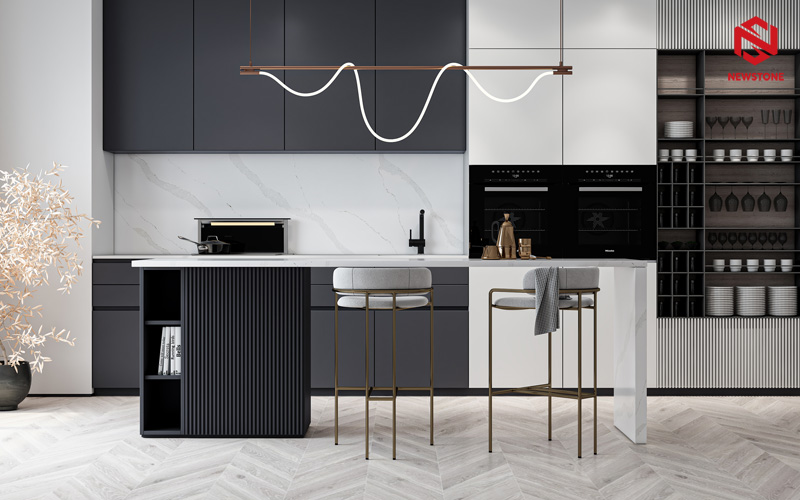
How Are Engineered Quartz and Natural Stone Different?
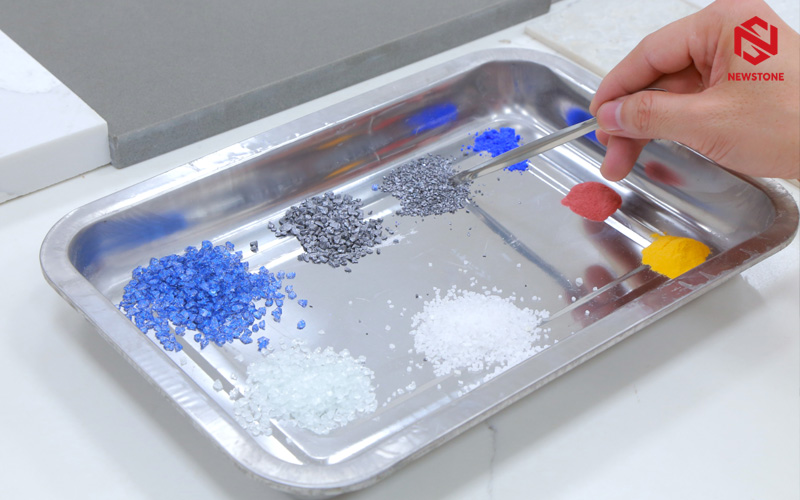
Engineered quartz is manufactured by combining quartz components with binders and other raw materials according to each factory’s production technology. Thanks to a controlled manufacturing process, products can be developed by collections, color codes, and specific slab specifications.
Natural stone, such as granite, marble, and other types, is quarried from natural stone blocks, then cut and processed into slabs. The key characteristic of this material group is its diversity in natural colors, structures, and veining.
Explore NewStone’s engineered quartz collections.
7 Criteria for Choosing Materials for Large-Scale Projects
1. Consistency Between Slabs
For hotels, apartments, resorts, or projects with many rooms and areas using the same design concept, material consistency is an important factor.
Engineered quartz is manufactured according to specific product codes and controlled processes. Therefore, it can help maintain a consistent design style across multiple items and areas within the same project.
Natural stone offers the advantage of unique beauty. However, color, structure, and veining may vary between slabs, depending on the quarrying location.
For projects requiring high consistency, businesses should review actual samples, production batches, and quality control standards before placing bulk orders.
2. Ability to Place Additional Orders
A project may be implemented in multiple phases. Some areas may be completed first, while others are developed several months later.
With engineered quartz, selecting products by color code and collection can make purchasing planning and additional ordering more convenient, depending on the supplier’s ability to maintain production.
For natural stone, finding the exact same stone type, block, or veining characteristics used previously can be more difficult because the raw material source depends on quarrying conditions.
Therefore, for multi-phase projects, the ability to supply additional materials should be included in supplier evaluation criteria from the beginning.
3. Fabrication Capability and Wastage Control
In projects with hundreds or thousands of details, fabrication efficiency can significantly affect the total material cost.
Slab specifications, product dimensions, vein direction, nesting/cutting plans, and detail design can all impact material utilization rates.
For engineered quartz, businesses can create cutting plans based on product codes and slab sizes while coordinating with fabrication units to optimize cutting layouts.
For natural stone, the veining, structure, and natural characteristics of each slab also need to be considered during cutting layout planning.
Therefore, when evaluating project quotations, businesses should not only compare unit prices per square meter. They should also consider wastage rates, fabrication costs, transportation costs, and related technical requirements.
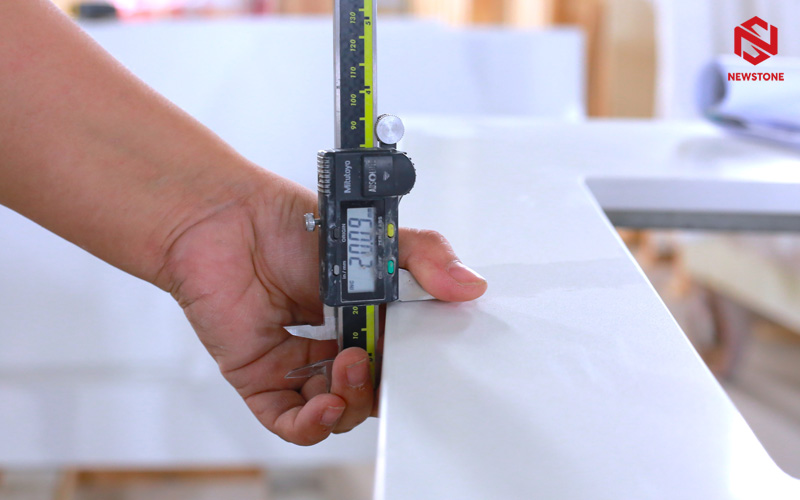
Explore NewStone’s Cut-to-size and Prefabs solutions.
4. Maintenance Requirements During Operation
For commercial buildings, materials must not only meet aesthetic requirements at handover but also be suitable for long-term operation and maintenance.
Some types of natural stone may require surface protection treatment and periodic maintenance, depending on the stone type, installation location, and operating conditions.
Meanwhile, many engineered quartz products are designed for interior applications and can support cleaning and maintenance under suitable usage conditions.
However, actual maintenance requirements should be determined based on the technical specifications of each product and the manufacturer’s guidelines, rather than being generalized for an entire material group.
5. Heat Resistance and Usage Conditions
Heat resistance is one of the factors that should be considered when choosing materials for kitchen countertops, bar counters, or areas that may come into contact with heat sources.
Many types of natural stone, especially granite, have properties suitable for applications requiring good heat resistance.
For engineered quartz, the product may be suitable for many interior applications. However, direct exposure to high heat or sudden temperature changes should be considered according to the technical guidelines of each manufacturer.
For commercial projects, the actual operating conditions of each item should be clearly identified before selecting products.
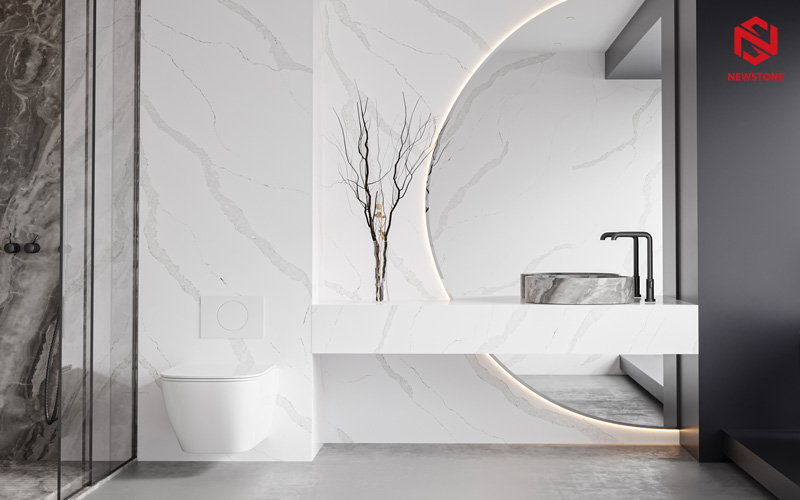
6. Suitability for Outdoor Areas
Not every type of stone is suitable for every environment. For outdoor areas, factors such as UV exposure, temperature, humidity, rain, and weather changes should be included in the material evaluation process.
Some types of natural stone may be suitable for outdoor applications depending on the stone type and project conditions.
For engineered quartz, businesses should separately check outdoor-use recommendations, color stability, and technical specifications of each product before incorporating it into the design.
This is one of the cases where selecting materials based on specific applications is more important than applying a single solution to the entire project.
7. Lifecycle Cost and Material Management
Material costs in a project do not only include the initial purchase price. A comprehensive evaluation should consider: Material price; Wastage rate; Fabrication cost; Transportation cost; Installation cost; Maintenance cost; Replacement capability; Additional ordering capability; Supply lead time
Therefore, when comparing engineered quartz and natural stone, total cost of ownership may be a more suitable approach than simply comparing initial unit prices.
Which Material Should Be Chosen for Each Project Item?
Instead of choosing one single material for the entire project, businesses can classify materials based on the usage conditions and requirements of each area.
| Project Item | Key Criteria to Prioritize | Materials to Consider |
|---|---|---|
| Hotel vanity tops | Consistency, large quantities, additional supply capability | Engineered quartz |
| Tabletops and kitchen countertops | Hygiene, consistency, supply capability | Engineered quartz |
| Reception counters | Aesthetics, slab specifications, fabrication capability | Engineered quartz or natural stone |
| Indoor bar counters | Aesthetics, hygiene, operating conditions | Engineered quartz or natural stone |
| Outdoor areas | UV resistance and environmental suitability | Select based on technical specifications |
| Feature items | Uniqueness and aesthetic value | Natural stone or engineered quartz, depending on the design |
The table above is for reference only. For specific projects, final decisions should be based on technical documents, actual samples, usage conditions, and manufacturer recommendations.
See more: NewStone’s completed projects.
3 Particularly Important Factors When Purchasing Materials for Large Projects
1. Multi-Phase Delivery
Hotel, apartment, and resort projects are often implemented in multiple phases. Therefore, suppliers need to be capable of planning production and delivery in line with the project schedule.
Identifying product codes, slab specifications, and estimated quantities in advance helps reduce risks when additional demand arises.
2. Material Reserve for Replacement
During operation, certain details may need to be repaired or replaced. Preparing a suitable reserve quantity from the beginning can help investors reduce risks related to color, veining, or differences between the original material and additional materials ordered later.
3. Technical Documentation and Manufacturer Support
For investors, contractors, design firms, and procurement teams, products must not only meet aesthetic requirements. The manufacturer should be able to provide necessary information such as: Catalogues; Technical specifications; Slab dimensions; Thickness options; Surface finishes; Care and use instructions; Relevant certifications; Production and supply capacity information
These documents provide a basis for investors, architects, contractors, and purchasing departments to evaluate products before placing orders.
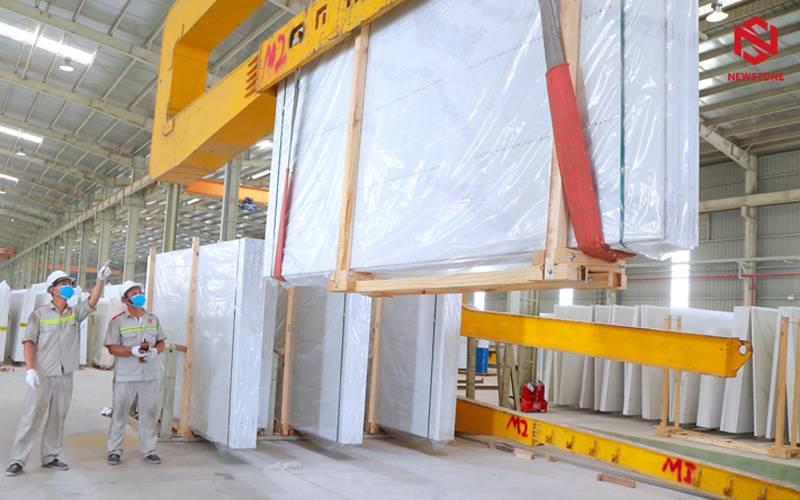
Engineered Quartz or Natural Stone: Which Is the Right Choice?
There is no single material that is suitable for every project.
Engineered quartz can be a worthwhile option for projects that require consistency, large quantities, synchronized design, and suitability for interior spaces.
Meanwhile, natural stone may be suitable for projects that prioritize unique natural beauty, differences between individual slabs, or applications with specific material requirements.
NewStone – Engineered Quartz Supplier for Project Clients
As a manufacturer and fabricator of engineered quartz in Vietnam, NewStone develops product portfolios for a wide range of interior applications and commercial projects.
NewStone provides engineered quartz collections in diverse colors, veining effects, surface finishes, and specifications, serving the needs of importers, distributors, contractors, and project partners.
For clients looking for an engineered quartz supply source for projects or distribution markets, NewStone can support with:
- Actual product samples
- Catalogues and collection information
- Technical specifications for each product line
- Slab size and thickness information
- Production capacity profile
- Consultation on project-based supply requirements
Looking for engineered quartz supply for your project or international market?
Contact NewStone to receive product samples and technical information.
NewStone Technology Joint Stock Company
Hotline: +84 210 3992 888
Address: Lot D3-1, Trung Ha Industrial Park, Tam Nong Commune, Phu Tho Province, Vietnam
Website: https://newstone.com.vn/
Fanpage: https://www.facebook.com/NEWSTONEJSC/
Featured Products

Splendor Product Code: NQ9034

Luxor Product Code: NP2000

Venatino Product Code: NQ8000

Grand Taj Sparkle Product Code: NQ9025

Lagos Product Code: NQ9035

Carrara Blanco Product Code: NQ6003

Black Carrara Product Code: NQ6005

Noreian Product Code: NQ6013

Mysteri Product Code: NQ8003

Mirario Emar Product Code: NQ8007

Calacatta Brook Product Code: NQ8015

Calacatta Gold Product Code: NQ9001

Juno Product Code: NQ9038

Roma Product Code: NZ5900

Milano Product Code: NZ5901

Neapolis Product Code: NZ5902
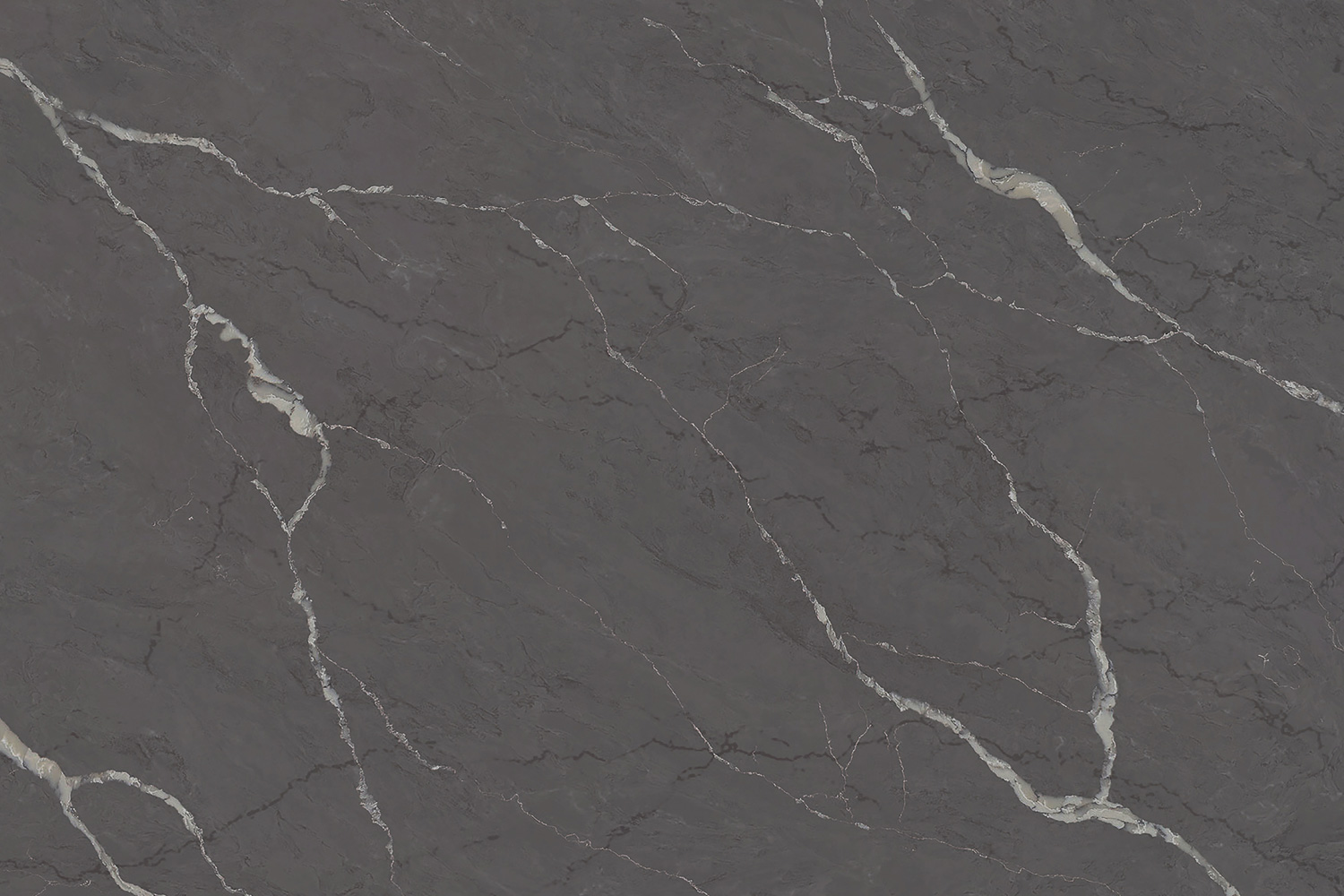
Florentia Product Code: NZ5903

Agusta Product Code: NZ5904

Lusso Gold Product Code: NQ8011

Lusso Classic Product Code: NQ8010

Leonardo Product Code: NQ8012

Tuscan Dream Product Code: NP2001

Arabescato Gold Product Code: NP2021

Garnet Product Code: NP2022

Darmaso Product Code: NP2024

Cristallo Product Code: NP2025

Calestial Product Code: NP2026
Featured Articles

Sign up for product consultation
Please leave your information, we will contact you immediately.