- Products
- Advanced Nano technology creates realistic, sharp, and sophisticated patterns.
- Striking veining blends artistry and nature for a luxurious touch.
- Timeless elegance with minimalist yet captivating designs.
- Crystalline Silica Free represents one of the most revolutionary advancements and the latest trends in the premium engineered quartz stone manufacturing industry.
- Pre-fabricated quartz pieces designed for convenience and beauty, reflecting each owner’s unique style and refined taste
- Customized quartz pieces precisely crafted to fit your project, ideal for countertops, vanities, and bespoke applications
- Applications
- Timeless Elegance & Durability
- Sophistication in Every Detail
- Serenity & Ultimate Comfort
- Your Personal Home Spa
- Projects
- News & Updates
- Discover Us
- Catalog
- Contact us


Standard Kitchen Countertop Dimensions 2026 | A Guide for Investors & Contractors
11:56 | 27/07/2026
Standard Kitchen Countertop Dimensions and Key Considerations
In kitchen interior design and fit-out projects, determining standard countertop dimensions is often considered a foundational step, directly affecting usability, overall aesthetics, and even installation progress. For design firms, construction contractors, and apartment project developers, understanding these standard specifications also helps minimize issues during countertop fabrication and installation, especially when using premium materials such as engineered quartz.
The article below summarizes the most common countertop dimensions used today, along with the factors that should be considered when selecting the right size for each type of project.
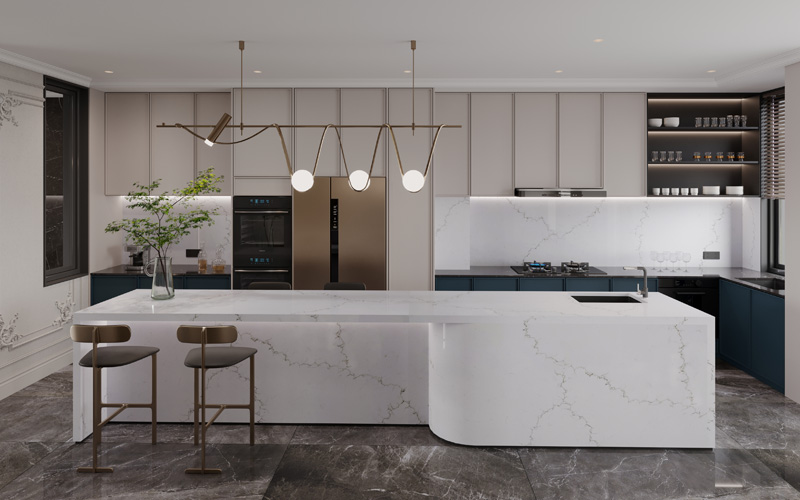
1. Why Are Standard Kitchen Countertop Dimensions Important?
For construction contractors, applying standard dimensions can provide several practical benefits, including:
- Supporting relatively accurate calculations of material quantities and fabrication costs from the drawing stage.
- Reducing discrepancies between design and actual installation, thereby minimizing issues during stone cutting and joining.
- Making it easier to coordinate with kitchen appliances commonly available on the market, such as induction cooktops, sinks, and range hoods.
- Providing a reference basis when consulting clients across different project segments, from townhouses and villas to apartment units.
However, the specifications below should be considered general references only. Actual dimensions should still be adjusted based on site conditions and the specific usage needs of each project.
2. Standard Kitchen Countertop Dimensions by Category
2.1. Countertop Width (Depth)
The standard kitchen countertop width typically ranges from 60 to 63 cm, measured from the wall edge to the outer edge of the countertop. This range is generally considered suitable for most built-in appliances such as induction cooktops and sinks without affecting daily cooking operations. For kitchen islands or countertops combined with dining functions, the width may be adjusted to 70–90 cm depending on intended use and the overall space available.
2.2. Countertop Length
Countertop length does not usually follow one fixed number, as it depends largely on the actual size and layout of the kitchen. On the market, large-format quartz slabs are commonly available in sizes around 200 x 350 cm or 160 x 320 cm. These dimensions also serve as a basis for calculating the number of joints required for long countertops.
2.3. Countertop Thickness
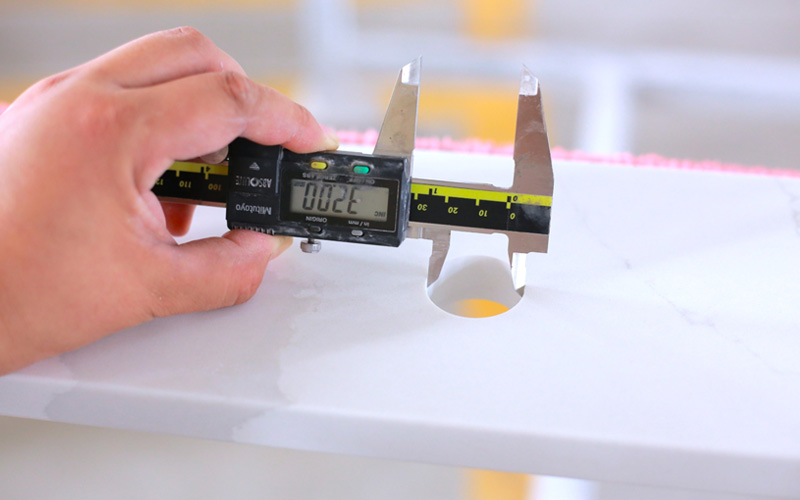
The most common countertop thicknesses currently are 2 cm and 3 cm, depending on aesthetic requirements, load-bearing needs, and the project budget.
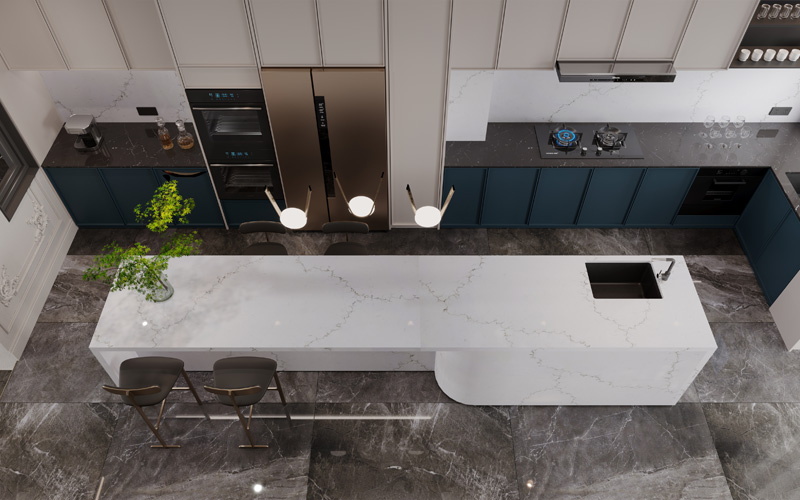
2.4. Countertop Height from the Floor
The standard kitchen countertop height, measured to the top finished surface, usually ranges from 81 to 87 cm. This is generally considered suitable for the average user height in Vietnam. In some custom designs, the height may be adjusted higher or lower depending on the main user’s height within the household or the design standards of a particular project.
2.5. Distance Between the Countertop and Upper Cabinets
The standard recommended distance is typically 60–65 cm, ensuring a comfortable working space and compatibility with the common installation height of range hoods.
3. Factors Affecting Actual Countertop Dimensions
In addition to standard specifications, the actual countertop dimensions in a given project may also be influenced by:
Kitchen area and layout: straight-line, L-shaped, U-shaped, or island kitchens require different sizing approaches.
Accompanying kitchen appliances: the dimensions of induction cooktops, sinks, and built-in dishwashers should be checked before finalizing the countertop stone size.
Overall design style: projects with modern and minimalist styles often prioritize seamless countertops with fewer joints.
4. Notes When Choosing Dimensions for Design and Construction Projects
For design firms and contractors, the following points may be considered during countertop planning and execution:
Conduct on-site surveys and actual measurements before finalizing drawings, instead of relying entirely on pre-existing standard dimensions.
Coordinate in advance with kitchen appliance suppliers to verify installation dimensions and avoid errors when cutting openings for sinks and cooktops.
For projects using large slabs, a reasonable joint layout should be calculated to ensure long-term aesthetics and durability.
5. Quartz Stone Materials and Their Ability to Meet Diverse Size Requirements
Among today’s commonly used materials, engineered quartz is often chosen by design and construction firms for kitchen countertops because it can be produced in large slab sizes, helping reduce joints on long countertops. In addition, quartz offers high consistency in color and veining across production batches, which is especially beneficial for projects that require uniform installation across multiple apartments or multiple project categories.
To learn more about technical properties and suitable product lines for different project types, partners may refer to the article: New Stone Engineered Quartz – The Gold Standard for Premium Kitchens.

6. Custom Kitchen Countertop Measurement and Production Process
For projects requiring custom dimensions, the process usually includes the following basic steps:
- Conduct site surveys and measure actual dimensions at the project location.
- Prepare detailed drawings and cross-check them against the installation positions of kitchen appliances.
- Provide quotations and finalize the material selection plan.
- Process and CNC-cut according to the approved drawings.
- Deliver and install on site, then inspect the final finish.
Partners interested in quotations and detailed technical specifications for individual projects may contact New Stone for consultation and pricing on quartz stone kitchen countertops, enabling a suitable implementation plan.
Understanding standard kitchen countertop dimensions and related influencing factors can be considered a necessary preparation step, helping the design and installation process proceed more smoothly while minimizing unwanted issues during installation. For projects with custom size requirements, early consultation with the material fabrication supplier, especially for engineered quartz, can help optimize both technical solutions and overall costs.
Partners, contractors, or design firms requiring technical consultation and detailed quotations for their projects are invited to explore more at the engineered quartz product page or contact the consulting team for tailored support.
GET FREE QUARTZ SAMPLE CONSULTATION HERE
New Stone Technology Joint Stock Company
Hotline: +84 210 3992 888
Address: Lot D3-1, Trung Ha Industrial Park, Tam Nong Commune, Phu Tho Province, Vietnam
Website: https://newstone.com.vn/
Fanpage: https://www.facebook.com/NEWSTONEJSC
Featured Products

Splendor Product Code: NQ9034

Luxor Product Code: NP2000

Venatino Product Code: NQ8000

Grand Taj Sparkle Product Code: NQ9025

Lagos Product Code: NQ9035

Carrara Blanco Product Code: NQ6003

Black Carrara Product Code: NQ6005

Noreian Product Code: NQ6013

Mysteri Product Code: NQ8003

Mirario Emar Product Code: NQ8007

Calacatta Brook Product Code: NQ8015

Calacatta Gold Product Code: NQ9001

Juno Product Code: NQ9038
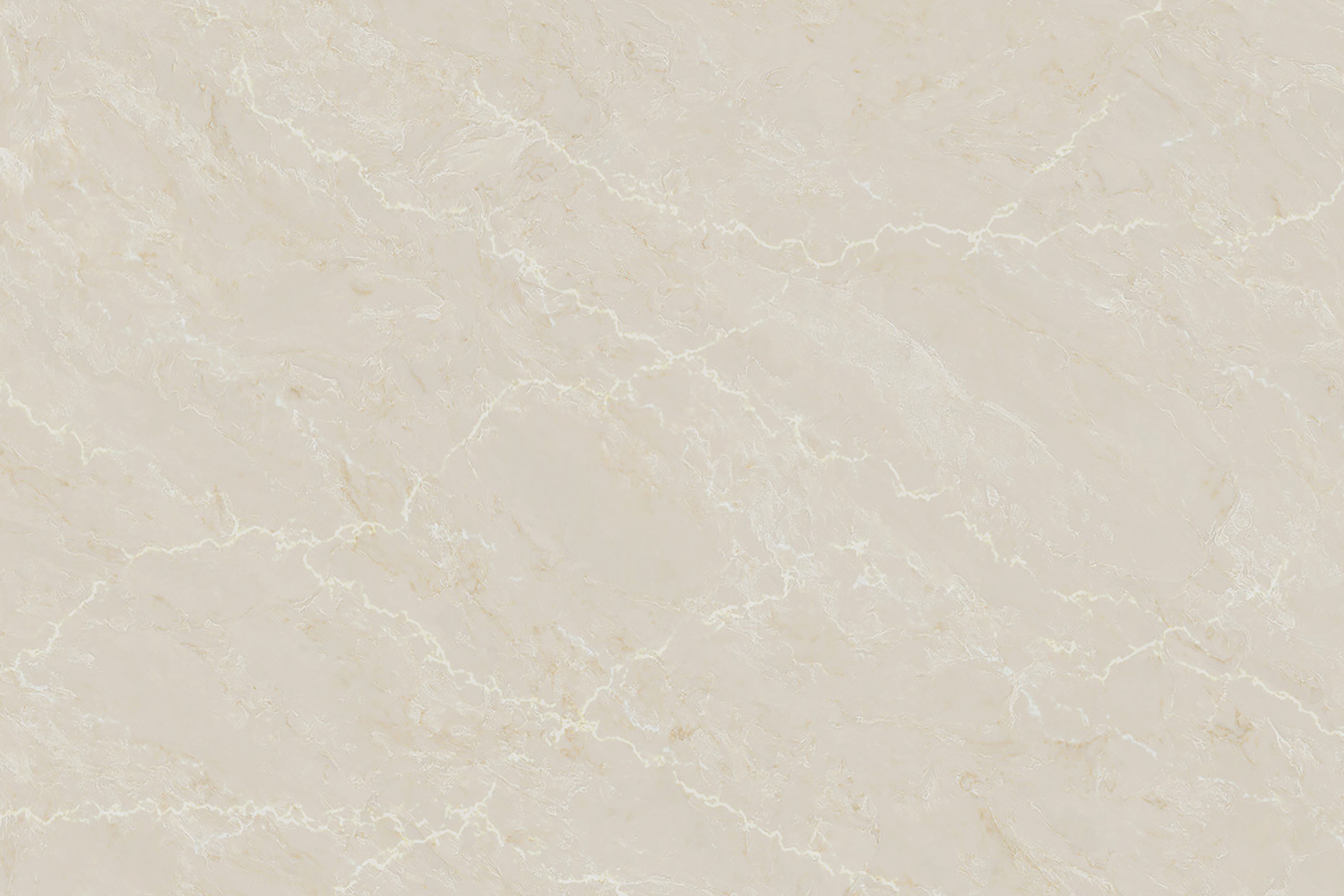
Roma Product Code: NZ5900

Milano Product Code: NZ5901

Neapolis Product Code: NZ5902
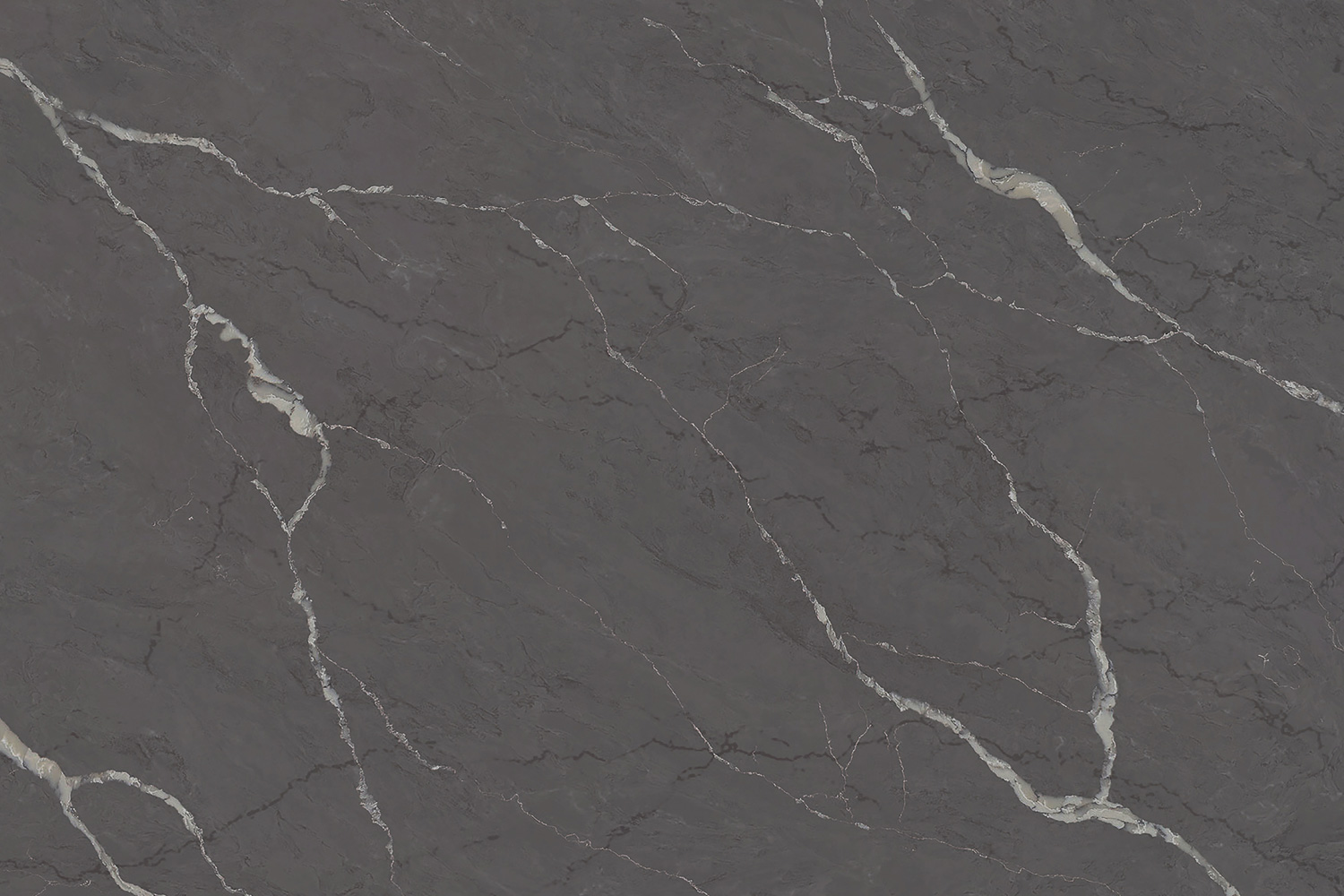
Florentia Product Code: NZ5903

Agusta Product Code: NZ5904

Lusso Gold Product Code: NQ8011

Lusso Classic Product Code: NQ8010

Leonardo Product Code: NQ8012

Tuscan Dream Product Code: NP2001

Arabescato Gold Product Code: NP2021

Garnet Product Code: NP2022

Darmaso Product Code: NP2024

Cristallo Product Code: NP2025

Calestial Product Code: NP2026
Featured Articles

Sign up for product consultation
Please leave your information, we will contact you immediately.